
How can industrial companies survive in an ecosystem where digital transformation dictates the pace of competitiveness? In a context where integration solutions for industry become essential, manufacturers face complex challenges: error-prone manual processes, strict regulations, and growing traceability requirements.
Indeed, according to a McKinsey 2024 study, 73% of manufacturing companies consider data integration for industry as a strategic priority. Consequently, industrialists seek solutions capable of connecting their teams, processes, and data in real time. Notably, standardization becomes crucial for maintaining quality and safety.
Key Takeaways Regarding Integration Solutions for Industry
- Digital transformation imperative: 78% of industrialists plan to invest heavily by 2027
- Proven ROI: Integrated solutions generate an average 23% productivity improvement
- Regulatory challenges: Pharmaceutical and chemical industries require certified solutions
- Emerging technologies: AI and augmented reality transform traditional operating procedures
- Centralized data: System interoperability becomes critical for decision-making
“Modern integration solutions enable digitalization of 85% of industrial manual processes. Picomto transforms your paper instructions into intelligent digital workflows, reducing errors by 60% while ensuring regulatory compliance.”

1. What Integration Challenges Do Modern Industries Face?
The evolution of industrial requirements today demands a complete overhaul of traditional approaches. However, this transformation comes with complex challenges that companies must master. Furthermore, successful integration requires an in-depth understanding of sector-specific issues.

1.1. How to Manage Manual Process Complexity in Regulated Sectors?
Pharmaceutical, chemical, and aerospace industries face particular constraints:
- Complete traceability: Every step must be documented and verifiable
- Regulatory compliance: FDA, EMA, and ANSM impose strict standards
- Process validation: Changes require rigorous protocols
- Audit trail: Complete action history must be preserved
According to the PwC 2026 study, 67% of industrial errors originate from poorly standardized manual processes. Moreover, non-compliance costs represent an average of 2.3% of revenue.
1.2. Why Does Procedure Standardization Become Critical for Competitiveness?
Harmonizing industrial practices generates measurable benefits:
- Error reduction: Up to 45% decrease according to Boston Consulting Group
- Quality improvement: Standardization of best practices
- Cost optimization: Elimination of operational redundancies
- Training acceleration: Unified and accessible procedures
Nevertheless, 73% of companies struggle to maintain this consistency without appropriate tools.
1.3. How to Ensure Operational Continuity Facing Departures and Training Needs?
Skills management represents a major challenge:
- Know-how transfer: Capitalizing on trade expertise
- Accelerated training: New employees operational quickly
- Team versatility: Flexibility facing activity variations
- Memory preservation: Documented and updated procedures
2. What technologies enable effective digital integration of industrial processes?
The industrial technology ecosystem evolves rapidly toward greater interconnection and intelligence. Thus, today’s solutions must anticipate tomorrow’s needs. Additionally, workflow automation becomes an essential prerequisite for maintaining competitiveness.
2.1. How do SaaS solutions revolutionize industrial tool accessibility?
Cloud integration platforms offer decisive advantages:
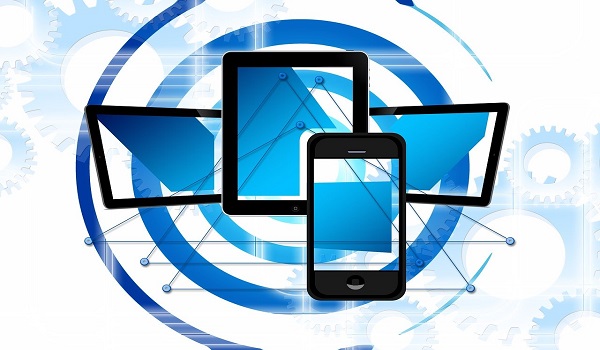
- Multi-device accessibility: Smartphones, tablets, computers, AR glasses
- Rapid deployment: Implementation within weeks
- Automatic updates: Continuous feature evolution
- Enhanced security: Certified and redundant infrastructure
Integration Platform as a Service (iPaaS: a suite of cloud services connecting fragmented applications, data, and processes, whether on-premise or in the cloud) experiences 34% annual growth according to Gartner. Furthermore, most CIOs (Chief Information Officers) now favor cloud-native solutions.
2.3. How do digital work instructions transform operations?
Digitalization of operating procedures revolutionizes execution:
- Interactive creation: Visual guides with photos and videos
- Centralized management: Instant updates across all workstations
- Personalization: Adaptation according to user profiles
- ERP and third-party application integration: Data synchronization
Companies using digital instructions observe 31% reduction in training time.
2.4. What is the importance of real-time field data collection?
Real-time data processing transforms decision-making:
- Dynamic forms: Structured collection of field information
- Automated photography: Visual documentation of interventions
- Instant reports: Immediate activity synthesis
- Performance alerts: Proactive deviation notifications
3. How to choose the integration solution adapted to your industrial sector?
Selecting an integration platform requires rigorous evaluation of specific needs. However, certain criteria remain universal for guaranteeing project success. Consequently, comparative analysis becomes essential before any technological investment.
3.1. What criteria to evaluate for highly regulated industries?
Regulated sectors require specific functionalities:
- Native compliance: Automatic adherence to sector standards
- Electronic validation: Digital signature and timestamping
- Secure archiving: Long-term record retention
- Access control: Granular user authorization management
What types of integration solutions for industry exist? Options vary from generalist platforms to specialized business solutions, each addressing distinct needs.
3.2. How can a unified platform cover all departments?
Information system integration must encompass all functions:
- Production: Operating procedures and quality control
- Maintenance: Preventive planning and connected equipment management
- Quality: Audit procedures and product traceability
- Logistics: Stock optimization and inventory management
This cross-functional approach generates 28% operational savings according to Accenture.
3.3. Why favor a scalable and interconnected solution?
Scalability determines investment sustainability:
- Modular architecture: Progressive functionality additions
- Open APIs: ERP integration for manufacturing industry
- Continuous monitoring: System performance surveillance
- Evolving support: Guidance through growth phases
4. What concrete benefits do industrial integration solutions provide?
Investment in digital integration generates measurable returns across multiple dimensions. Thus, companies observe both quantitative and qualitative improvements. Consequently, value chain optimization becomes tangible within the first months.
4.1. How to measure impact on productivity and quality?
Performance indicators reveal solution effectiveness:
- Production delay reduction: Average gain of 19%
- Customer experience improvement: Satisfaction increased by 24%
- Non-conformity decrease: 41% defect reduction
- Industrial process optimization: Workflow rationalization
Industrial data visualization enables precise monitoring of these KPIs.
4.2. How does remote maintenance revolutionize technical support?
Remote expertise transforms industrial maintenance:
- Immediate intervention: Resolution without expert travel
- Cost reduction: 47% savings on interventions
- Extended availability: 24/7 support from anywhere
- Field training: Real-time guidance
Picomto Remote Expert perfectly illustrates this major technological evolution.
4.3. How to guarantee delivery of the right information at the right time?
Customer service optimization requires personalization:
- Intelligent notifications: Contextual and relevant alerts
- Adapted content: Information according to profile and authorizations
- Universal accessibility: Consultation on all connected devices
- Automatic updates: Immediate modification synchronization
5. How to successfully implement an integration solution in your industry?
Integration project success relies on proven methodology and structured support. However, each industrial sector presents specificities that must be mastered. Furthermore, digital transformation requires a progressive and measured approach.
5.1. What Steps to follow for progressive digitalization?
Methodical implementation guarantees user adoption:
- Initial audit: Existing process analysis and gain identification
- Pilot project: Testing on restricted scope with volunteer users
- Phased deployment: Progressive extension to all departments
- Continuous measurement: Indicator monitoring and necessary adjustments
This approach reduces change resistance.
5.2. How to effectively train your teams on new digital tools?
Industrial agility depends on skills development:
- Field training: Learning directly at workstations
- Interactive materials: Visual guides and integrated tutorials
- Personalized support: Coaching adapted to user profiles
- Skills validation: Digital competency certification
Successful digital industrialization involves 78% of employees in the process.
5.3. What indicators to monitor for optimizing your investment?
Data governance guides decisions:
- Adoption rate: Effective use by field teams
- Operational gains: Quantified measurement of improvements
- Progressive ROI: Return on investment by deployment phase
- User satisfaction: Continuous operator feedback
Conclusion
Evolution toward Industry 4.0 today mandates adoption of high-performing and scalable integration solutions for industry. Indeed, these platforms radically transform how manufacturing companies manage their operations, train their teams, and optimize their processes.
Picomto, a SaaS solution dedicated to the industry of the future, supports this transformation by fully digitalizing the value chain around work instructions. Thus, our platform ensures delivery of the right information to the right person at the right time, whether operating procedures, checklists, or procedures.
Transform your industrial challenges into competitive advantages today.
Contact our experts for a personalized demonstration!
FAQ
What are the main continuous integration tools?
iPaaS platforms, API management, ETL, and middleware solutions.
What is an integration strategy?
A structured approach connecting systems, data, and business processes.
What is enterprise integration?
Interconnection of information systems to optimize workflows.
What are the 5 stages of an integration plan?
Audit, design, development, testing, deployment, and maintenance.
How to achieve successful integration?
Define objectives, analyze existing systems, choose technologies, train teams.
What are the 5 main collaborative tools?
Unified platforms, communication tools, file sharing, video conferencing, project management.








Leave A Comment